Lean
PRINCIPLES OF LEAN
VALUE ADDED
- What the customer is willing to pay for.
VALUE STREAM CATEGORIES OF ACTIVITIES
- Those that unambiguously add value.
- Those that create no value but are unavoidable.
- Those that add no value and can be eliminated.
CATEGORIES OF WASTE
- Overproduction
Producing something unnecessary, or before it is required, unnecessary functions or features.
- Inventory
Work in progress, work carried out or materials available "just in case". Decisions to be made, information to be checked or issued.
- Over-Processing
Doing more work than is necessary for the customer, unnecessary steps in a process, unnecessary reviews, unnecessary approvals.
- Motion
Unnecessary motion of people, information seeking.
- Transportation
Unnecessary movement of materials/assemblies.
- Waiting
Material waiting to be used, delays due to decisions or information flow. Delays in the process, delays in decisions.
- Defects
The most obvious, but reducing all of the above will reduce defects.
7 CATEGORIES OF SERVICE WASTES
- Delay
- Duplication
- Unnecessary Movement
- Unclear Communications
- Incorrect Inventory
- Opportunity
- Errors
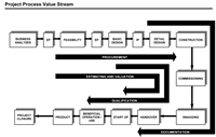
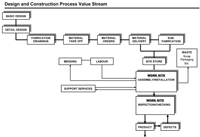
Click on the above images to see the value streams to which the above processes can be implemented.
UNDERSTAND VALUE FROM THE CUSTOMER PERSPECTIVE
MAKE VALUE FLOW
ALLOW THE CUSTOMER TO PULL
SEEK PERFECTION



